2026-07-11
Messier 24: Sagittarius Star Cloud
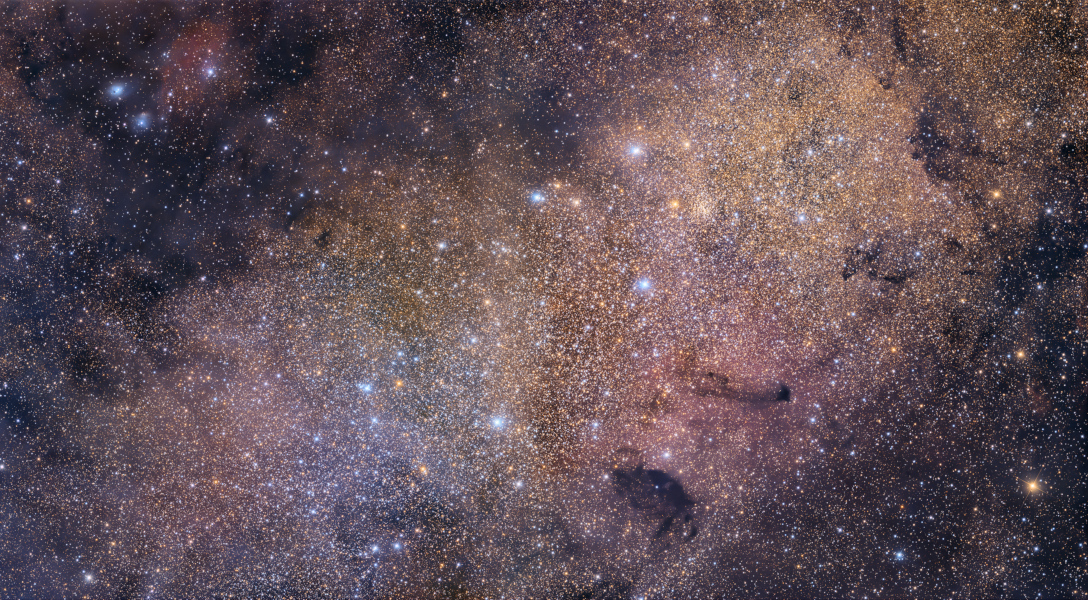
The universe showed off again today — Messier 24: Sagittarius Star Cloud. Here is what NASA captured:
Why this matters
This scene highlights deep-space objects, the Moon. The same physics that lets us photograph it also lets us predict where objects will be tomorrow — which is exactly what real-time tracking is built on.
See it live on ObjectTracer
This connects to what you can track in real time on our 3D globe — explore Deep Space galaxy map · Moon tracker. Or open the live globe to watch flights, satellites, the ISS and spacecraft move right now.
The science — from NASA's Astronomy Picture of the Day
Unlike most entries in Charles Messier's famous catalog of deep sky objects, M24 is not a bright galaxy, star cluster, or nebula. It's a gap in nearby, obscuring interstellar dust clouds that allows a view of the distant stars in the Sagittarius spiral arm of our Milky Way galaxy. Direct your gaze through this gap with binoculars or a small telescope and you are looking through a window over 300 light-years wide at stars some 10,000 light-years or more from Earth. Sometimes called the Small Sagittarius Star Cloud, M24's luminous stars stretch across this gorgeous interstellar scene. Spanning over four full moons on the sky toward the constellation Sagittarius, the telescopic field of view includes dark markings B92 and B93 near the center of M24, along with other clouds of dust and glowing nebulae toward the center of the Milky Way.
Image credit: Chuck Ayoub · Source: NASA APOD