2026-07-21
Turtle Rock on Mars
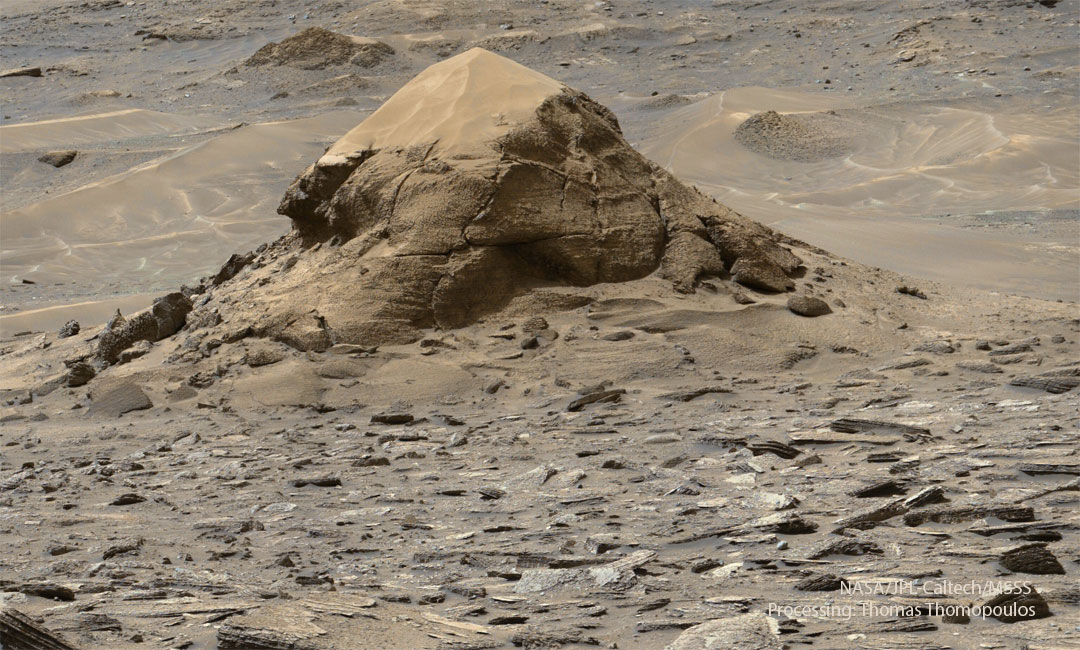
Space never stops amazing us. Today: Turtle Rock on Mars. Here is the science:
Why this matters
Behind the picture is the planets. Light that left these objects long ago is only reaching us now, which is why a single image can double as a snapshot of the distant past.
See it live on ObjectTracer
This connects to what you can track in real time on our 3D globe — explore Solar System view. Or open the live globe to watch flights, satellites, the ISS and spacecraft move right now.
The science, from NASA's Astronomy Picture of the Day
Is this a fossilized turtle on Mars? No. Although resembling a large Earth tortoise, this is a layered rock outcrop on Mars that is estimated to span about 15 meters, making it much larger than turtles on Earth. NASA’s robotic Curiosity rover came across this unusual mound, dubbed Miraflores, last month during its 4922nd Martian day exploring Mars. The small butte may survive because it was somehow more resistant to erosion than surrounding rock. More recent wind has now covered its top with orange Martian sand. Below the top shell, many layers of stratified rock are visible, possibly indicating a long history of intermittent wind-blown sand being deposited and then hardened by ground water. Similar wind-eroded layered landforms, such as yardangs in the Qaidam Desert of China, exist here on Earth. Curiosity and its companion rover Perseverance continue to investigate the ancient history of Mars as well as searching for signs of primeval life.
Source: NASA Astronomy Picture of the Day (public domain)
More from the Space Journal
- Flying Saucer Crash Lands in Utah Desert2026-07-19
- Shadow and Rainbow2026-07-18
- Red Sprites in the Tatacoa Desert2026-07-15
- AR 4478: Giant Sunspot Group2026-06-28
- Dueling Bands over the Atacama Desert2026-07-06
- Auroras from Space2026-07-13