2026-09-18
Messier 33: The Triangulum Galaxy
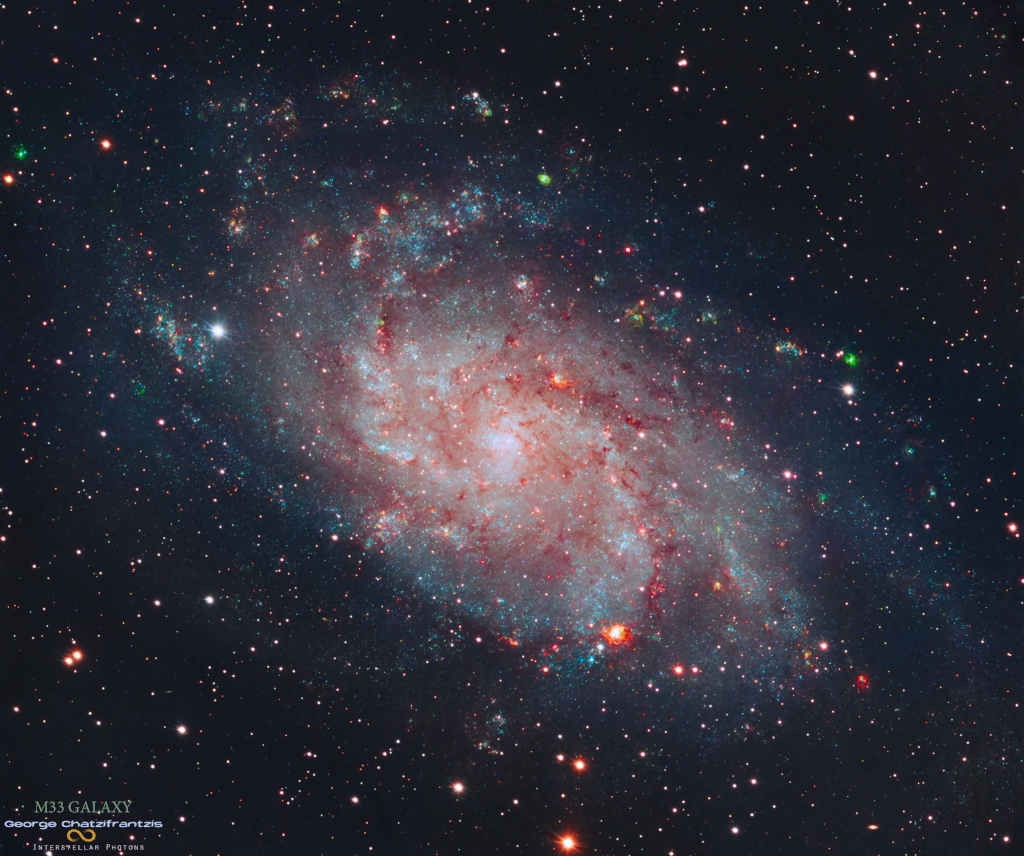
Another stunning view from the cosmos: Messier 33: The Triangulum Galaxy. NASA explains:
Why this matters
What you're looking at ties directly to deep-space objects. Every frame the world's observatories capture adds another data point to humanity's slowly-assembling map of everything beyond our planet.
See it live on ObjectTracer
This connects to what you can track in real time on our 3D globe — explore Deep Space galaxy map. Or open the live globe to watch flights, satellites, the ISS and spacecraft move right now.
The science, from NASA's Astronomy Picture of the Day
The small, northern constellation Triangulum harbors this magnificent face-on spiral galaxy, Messier 33. Its popular names include the Pinwheel Galaxy or just the Triangulum Galaxy. M33 is over 50,000 light-years in diameter, third largest in the Local Group of galaxies after the Andromeda Galaxy (M31), and our own Milky Way. About 3 million light-years from the Milky Way, M33 is itself thought to be a satellite of the Andromeda Galaxy and astronomers in these two galaxies would likely have spectacular views of each other's grand spiral star systems. As for the view from the Milky Way, this sharp telescopic image shows off M33's blue star clusters and pinkish star forming regions along the galaxy's loosely wound spiral arms. In fact, the cavernous NGC 604 is the brightest star forming region, seen here at about the 5 o'clock position from the galaxy center. Like M31, M33's population of well-measured variable stars have helped make this nearby spiral a cosmic yardstick for establishing the distance scale of the Universe. APOD's main NASA site is moving: From apod.nasa.gov to science.nasa.gov/apod
Image credit: George Chatzifrantzis · Source: NASA APOD
More from the Space Journal
- Webb's View of M642026-09-16
- Where Your Elements Came From2026-09-14
- M83: The Southern Pinwheel2026-09-11
- NGC 4372 and the Dark Doodad2026-07-31
- Rubin's COSMOS field2026-08-07
- Total Solar Eclipse from Greenland2026-08-14