2026-07-09
The Red Glow of the Cosmic Bat Nebula
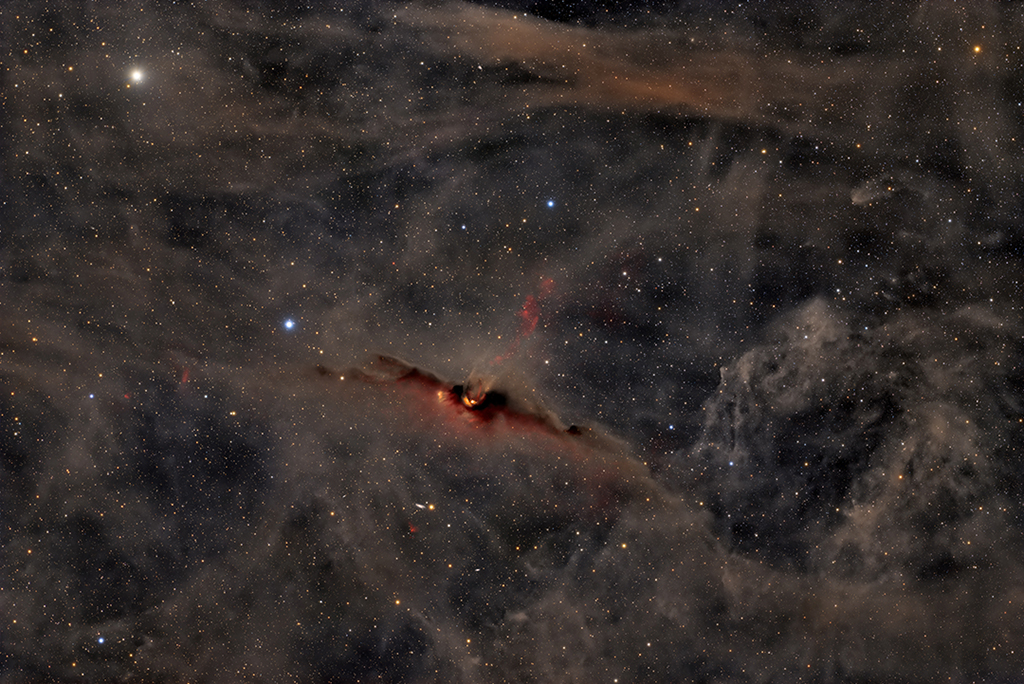
Space never stops amazing us. Today: The Red Glow of the Cosmic Bat Nebula. Here is the science:
Why this matters
Today's highlight centers on deep-space objects. Understanding how these objects form and move is the bridge between a pretty photo and the live, data-driven sky we render on the globe.
See it live on ObjectTracer
This connects to what you can track in real time on our 3D globe — explore Deep Space galaxy map. Or open the live globe to watch flights, satellites, the ISS and spacecraft move right now.
The science — from NASA's Astronomy Picture of the Day
This Cosmic Bat wishes you a happy Summerween! This mid-year celebration of Halloween transcends hemispheres, even though summer in the Northern hemisphere is winter in the South. Contrary to its eery aura, the Cosmic Bat Nebula (LDN 43), not to be confused with the Bat Nebula (NGC 6995), is a vibrant birthplace for stars. A bit of young starlight peeks through the dense clouds of gas and dust that make up the Cosmic Bat’s 12 lightyear wingspan. The ultraviolet light from the young stars energizes the nebula’s hydrogen gas, causing it to glow an ominous red. The jet of glowing hydrogen gas emerging from the bat’s head hints at the star formation hidden within.
Image credit: Humbert Cédric Text: Keighley Rockcliffe (NASA GSFC, UMBC CSST, CRESST II) · Source: NASA APOD