2026-09-07
The Pelican Nebula in Gas, Dust, and Stars
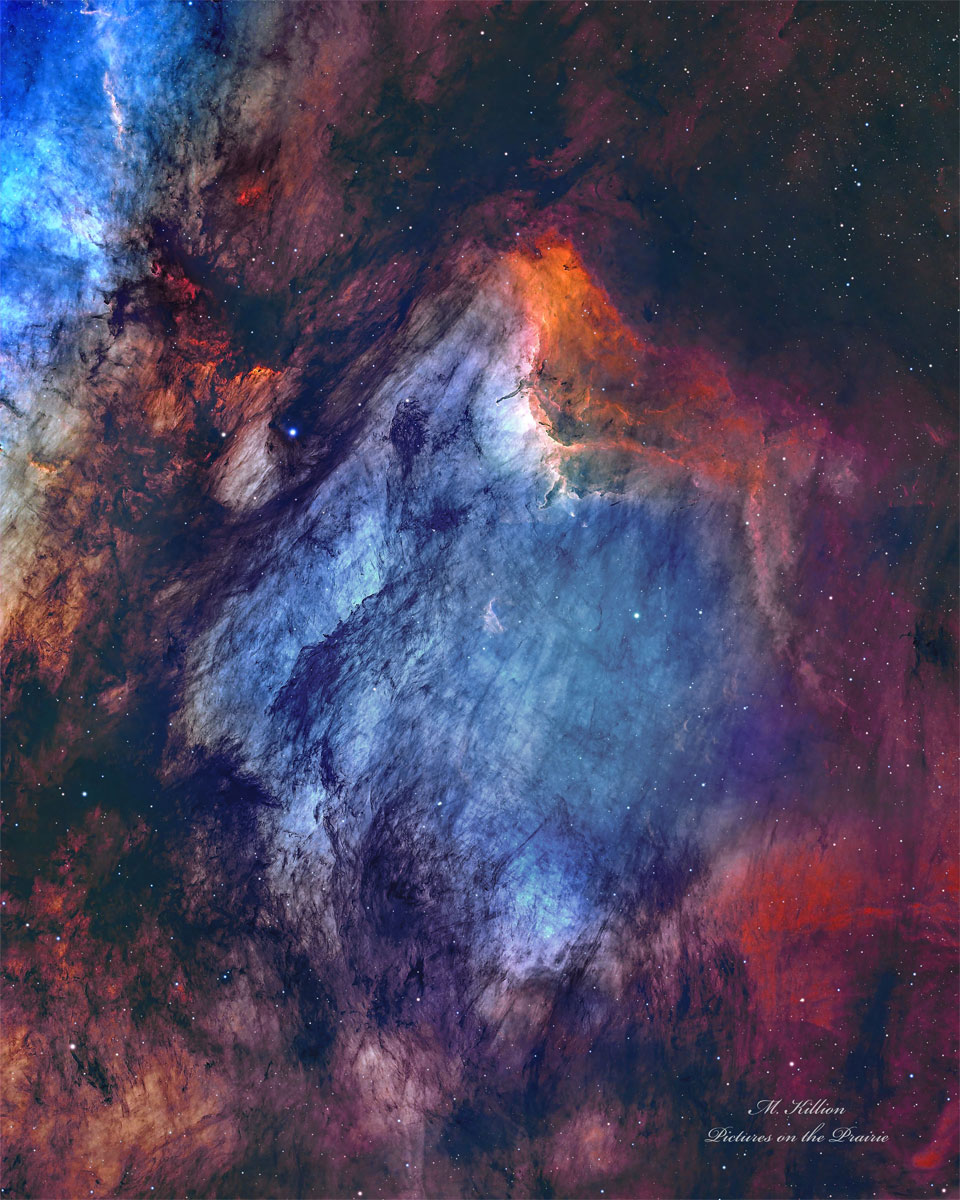
Another stunning view from the cosmos: The Pelican Nebula in Gas, Dust, and Stars. NASA explains:
Why this matters
Today's highlight centers on deep-space objects. Understanding how these objects form and move is the bridge between a pretty photo and the live, data-driven sky we render on the globe.
See it live on ObjectTracer
This connects to what you can track in real time on our 3D globe — explore Deep Space galaxy map. Or open the live globe to watch flights, satellites, the ISS and spacecraft move right now.
The science, from NASA's Astronomy Picture of the Day
The Pelican Nebula is slowly being transformed. IC 5070 (an official designation) is divided from the larger North America Nebula by a molecular cloud filled with dark dust. The deep featured picture from Utah, USA incorporates 25 hours of exposure and brings out great details of this filamentary dust. The Pelican Nebula receives much study because it is a particularly active mix of star formation and evolving gas clouds. The light from young energetic stars is slowly transforming the cold gas to hot gas, with the advancing boundary between the two, known as an ionization front, visible in bright orange on the upper right. Particularly dense tentacles of cold gas remain. Millions of years from now, the Pelican Nebula, bounded by dark nebula LDN 935, might no longer be known as the Pelican, as the balance and placement of stars and gas will surely leave something that appears completely different. APOD's main NASA site is moving: From apod.nasa.gov to science.nasa.gov/apod
Image credit: Mark Killion · Source: NASA APOD
More from the Space Journal
- M83: The Southern Pinwheel2026-09-11
- LDN 1295: The Giraffe Nebula2026-09-10
- Witness XZ Andromedae Wink2026-09-09
- A Plane Lunar Eclipse2026-09-01
- Barnards Loop over Twin Volcanoes2026-07-28
- New Sharpest Image of the Sun Uncovers Instability2026-08-06
← Pluto in Enhanced Color · Hubble: Decagon Around Saturn's South Pole →