2026-09-25
Globular Cluster Omega Centauri
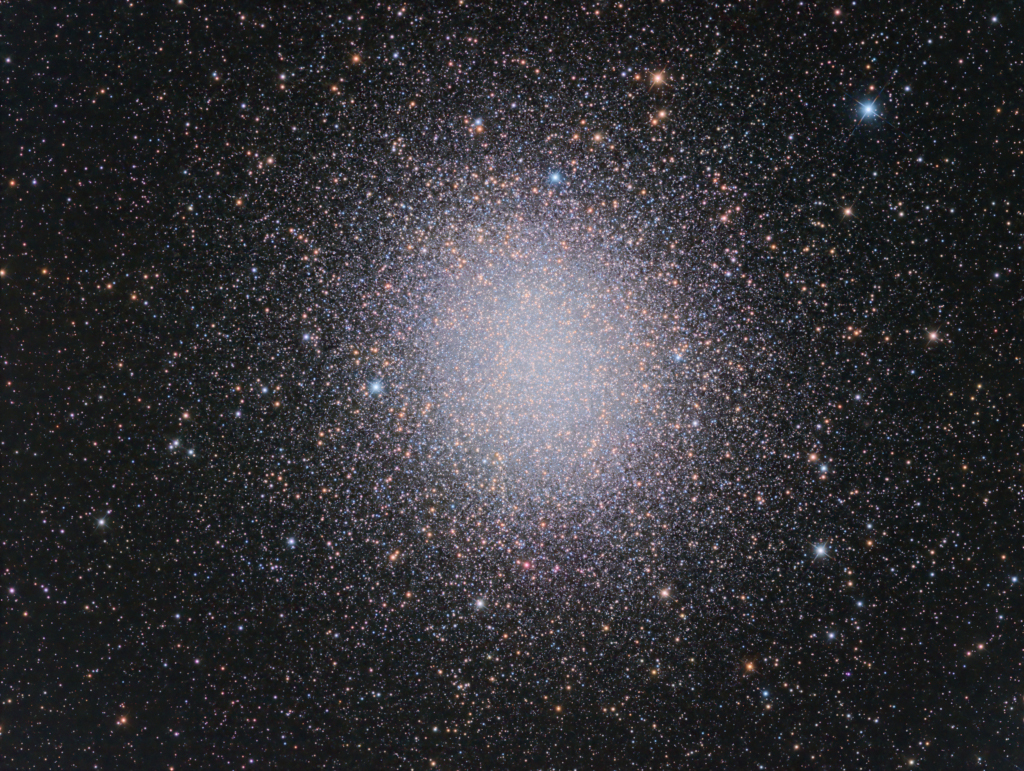
Another stunning view from the cosmos: Globular Cluster Omega Centauri. NASA explains:
Why this matters
Today's highlight centers on deep-space objects. Understanding how these objects form and move is the bridge between a pretty photo and the live, data-driven sky we render on the globe.
See it live on ObjectTracer
This connects to what you can track in real time on our 3D globe — explore Deep Space galaxy map. Or open the live globe to watch flights, satellites, the ISS and spacecraft move right now.
The science, from NASA's Astronomy Picture of the Day
Globular star cluster Omega Centauri packs about 10 million stars much older than the Sun into a volume some 150 light-years in diameter. Also known as NGC 5139, at a distance of 15,000 light-years it's the largest and brightest of 200 or so known globular clusters that roam the halo of our Milky Way galaxy. Though most star clusters consist of stars with the same age and composition, the enigmatic Omega Cen exhibits the presence of different stellar populations with a spread of ages and chemical abundances. In fact, Omega Cen may be the remnant core of a small galaxy merging with the Milky Way. With a yellowish hue, Omega Centauri's red giant stars are easy to pick out in this sharp telescopic view. A two-decade-long exploration of the dense star cluster with the Hubble Space Telescope has revealed evidence for a massive black hole near the center of Omega Centauri. APOD's email for image submissions has changed. Please see: APOD Submissions. APOD's main NASA site is moving: From apod.nasa.gov to science.nasa.gov/apod
Image credit: Javier O. Cadenas Parra · Source: NASA APOD
More from the Space Journal
- Cocoon Nebula Wide Field2026-09-21
- A Zodiacal Night2026-09-19
- Messier 33: The Triangulum Galaxy2026-09-18
- A Treasure Chest in the Carina Nebula2026-09-17
- A Plane Lunar Eclipse2026-09-01
- Milky Way over Yellowstone2026-08-16