2026-06-04
A Planetary Nebula with Cosmic Buckyballs
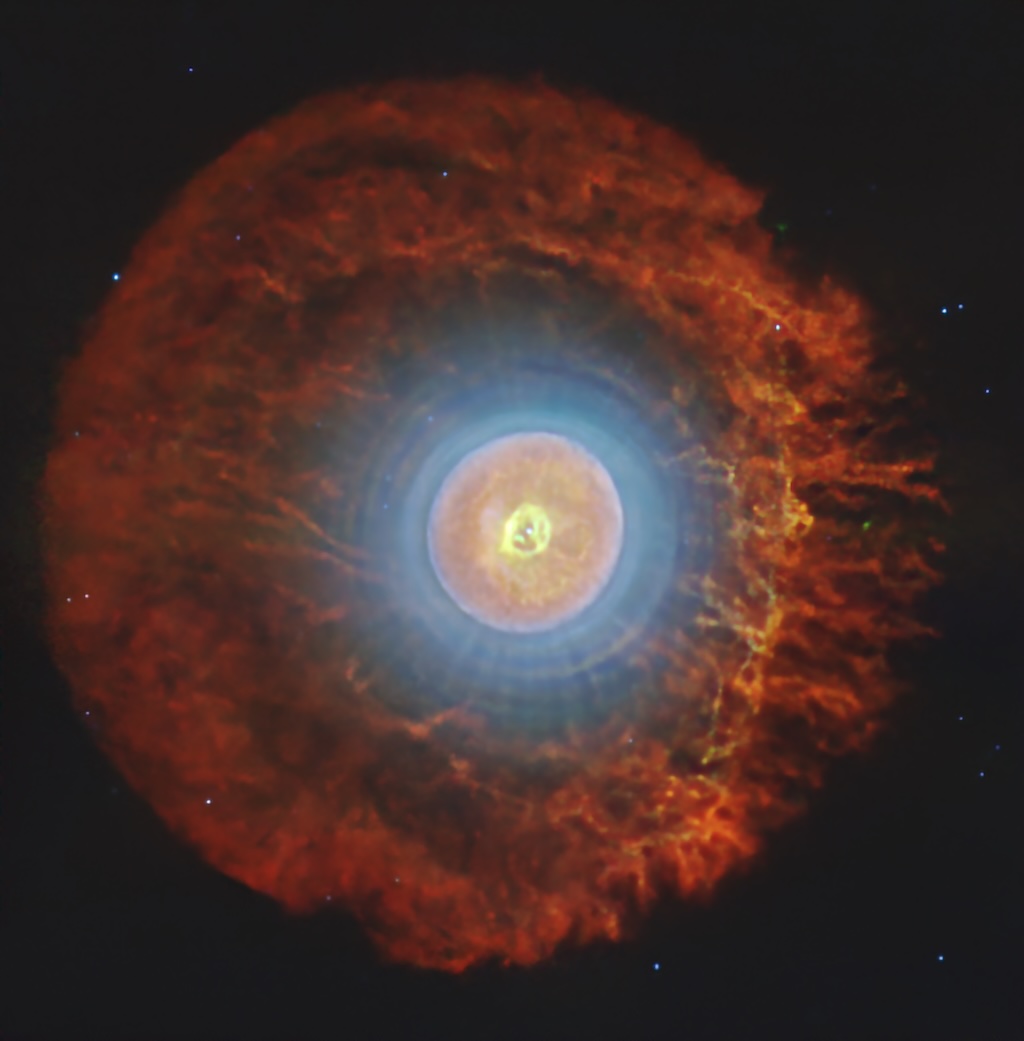
Another stunning view from the cosmos: A Planetary Nebula with Cosmic Buckyballs. NASA explains:
Why this matters
Behind the picture is deep-space objects, the planets. Light that left these objects long ago is only reaching us now, which is why a single image can double as a snapshot of the distant past.
See it live on ObjectTracer
This connects to what you can track in real time on our 3D globe — explore Deep Space galaxy map · Solar System view. Or open the live globe to watch flights, satellites, the ISS and spacecraft move right now.
The science, from NASA's Astronomy Picture of the Day
What is happening inside this unusual nebula? Planetary nebula Tc 1, captured here in exquisite detail by the James Webb Space Telescope, is the celestial site where buckyballs were first identified in 2010. Buckminsterfullerene — as buckyballs are officially called — is a molecule with 60 carbon atoms (C60) arranged in the shape of a soccer ball. The molecule is named for architect Buckminster Fuller because of its resemblance to the geodesic dome he helped popularize. Webb’s new data reveal where the C60 molecules live in this nebula, and the geometry is striking: they populate a thin spherical shell around the central star, visible here as the bright edge of the nebula’s glowing orange central region. Look closely near the nebula’s heart and a more perplexing feature emerges: a delicate structure shaped uncannily like an upside-down question mark, fitting punctuation for the many questions this nebula still poses.
Source: NASA Astronomy Picture of the Day (public domain)