2026-07-22
The Corona Australis Molecular Cloud and the Chandelier Cluster
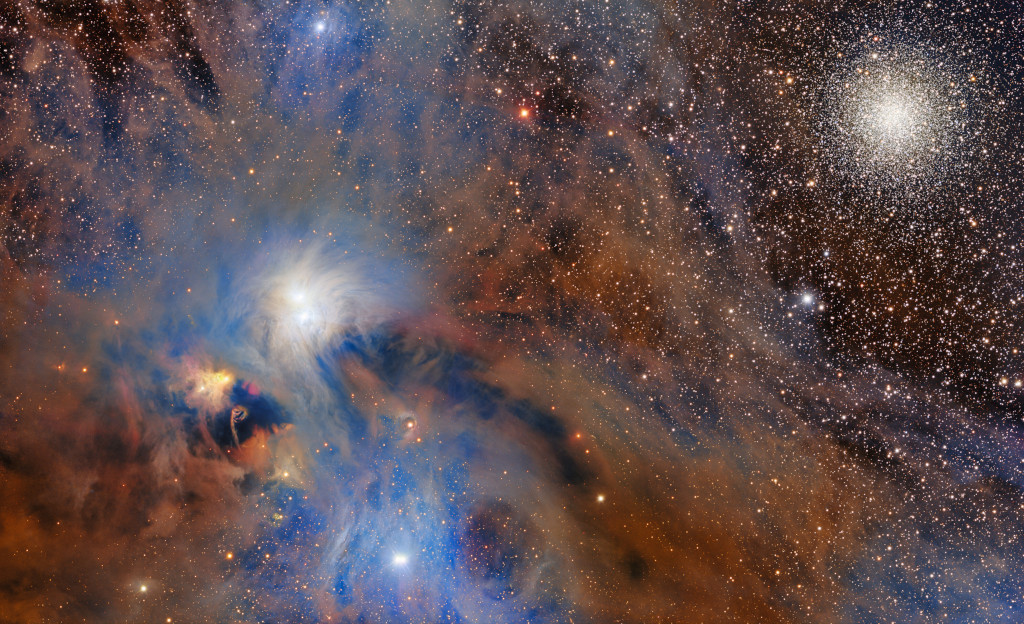
Today's window into deep space: The Corona Australis Molecular Cloud and the Chandelier Cluster. The story behind the image:
Why this matters
Today's highlight centers on deep-space objects, solar activity. Understanding how these objects form and move is the bridge between a pretty photo and the live, data-driven sky we render on the globe.
See it live on ObjectTracer
This connects to what you can track in real time on our 3D globe — explore Deep Space galaxy map · Solar System view. Or open the live globe to watch flights, satellites, the ISS and spacecraft move right now.
The science, from NASA's Astronomy Picture of the Day
The Southern Crown (Corona Australis) dazzles with young and ancient celestial jewels. The Corona Australis Cloud is a collage of reflection and emission nebulae on the left of today’s image. At 430 light years away, this cloud is one of the closest star-forming regions to Earth. It contains gas cool enough (-260 Celsius or -440 Fahrenheit) to collapse into protostars. Recently formed stars paint blue hues across the cloud as their light reflects off surrounding material. The waltz of the R Coronae Australis binary system stirs up the nebula NGC 6729. The younger of the pair ionizes nearby gas with its ultraviolet light, causing it to glow. The Chandelier Cluster (NGC 6723) dangles from the top right, but is actually tens of thousands of light years farther away than its apparent star-forming neighbor. While NGC 6723 experienced multiple periods of star formation creating slightly younger stars, the chandelier twinkles with stars almost as old as the universe.
Source: NASA Astronomy Picture of the Day (public domain)