2026-07-16
NGC 300: A Cosmic Gemstone with Stars and Gas Clouds
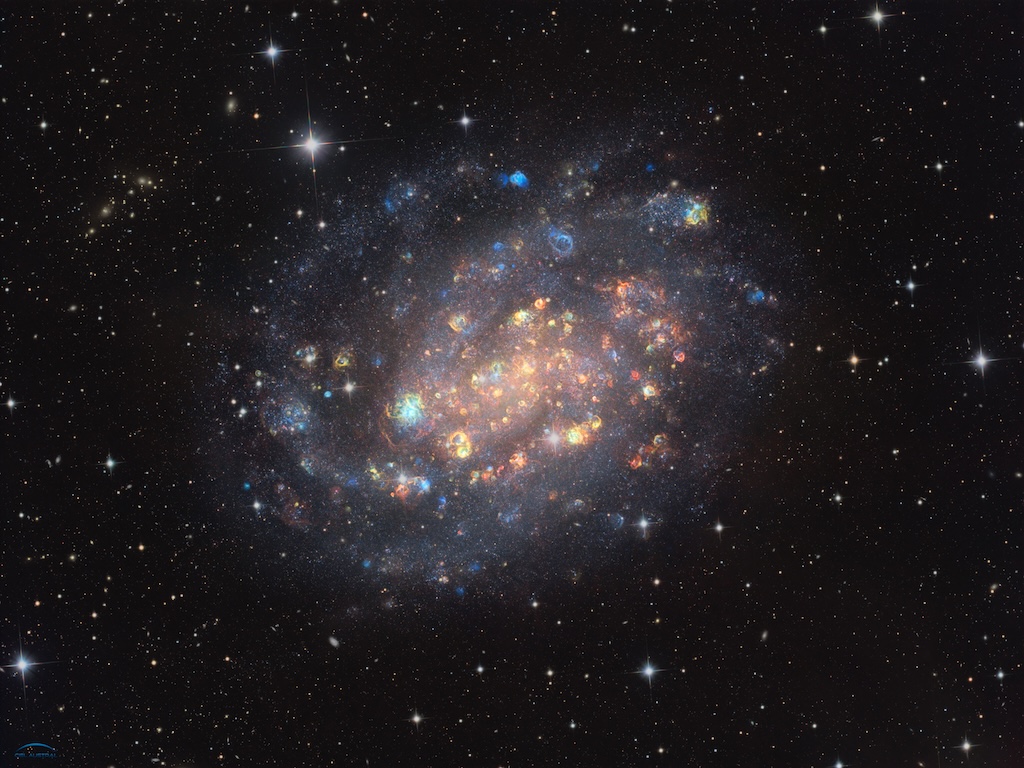
Look up and wonder. Today's cosmic highlight is NGC 300: A Cosmic Gemstone with Stars and Gas Clouds:
Why this matters
This scene highlights deep-space objects. The same physics that lets us photograph it also lets us predict where objects will be tomorrow — which is exactly what real-time tracking is built on.
See it live on ObjectTracer
This connects to what you can track in real time on our 3D globe — explore Deep Space galaxy map. Or open the live globe to watch flights, satellites, the ISS and spacecraft move right now.
The science, from NASA's Astronomy Picture of the Day
This sparkling, colorful gemstone is a spiral galaxy, NGC 300. It is one of the closest spiral galaxies to Earth, only about 6 million light-years away. But does it really look like this? Here is a more standard portrait of it. This unusual image combines the light from the stars and dust within the galaxy with the light from ionized clouds of interstellar gas shown in red (Sulphur), green (Hydrogen) and blue (Oxygen). Combining red and green light in different proportions makes yellow or orange light, most visible in the image. Light from other ionized gases is also at work in neon signs, fluorescent tubes and street lights. These massive clouds of ionized gas are typically created by young, massive stars that produce high-energy ultraviolet radiation capable of ionizing the gas. Massive stars are short-lived, compared with lighter stars like our sun, and explode as supernovas at the end of their lives. Some of the colorful clouds in the image could be hiding supernova remnants.
Image credit: Team Ciel Austral Text: Cecilia Chirenti (NASA GSFC, UMCP, CRESST II) · Source: NASA APOD
More from the Space Journal
- Galaxy NGC 474: Shells and Star Streams2026-07-12
- Messier 24: Sagittarius Star Cloud2026-07-11
- The Red Glow of the Cosmic Bat Nebula2026-07-09
- NGC 6188: Dragons of Ara2026-07-07
- Unusually Smooth Sections of Asteroid Itokawa2026-06-30
- Flying Past Neptune's Moon Triton2026-06-23