2026-06-08
Comet R3 PanSTARRS Through Time
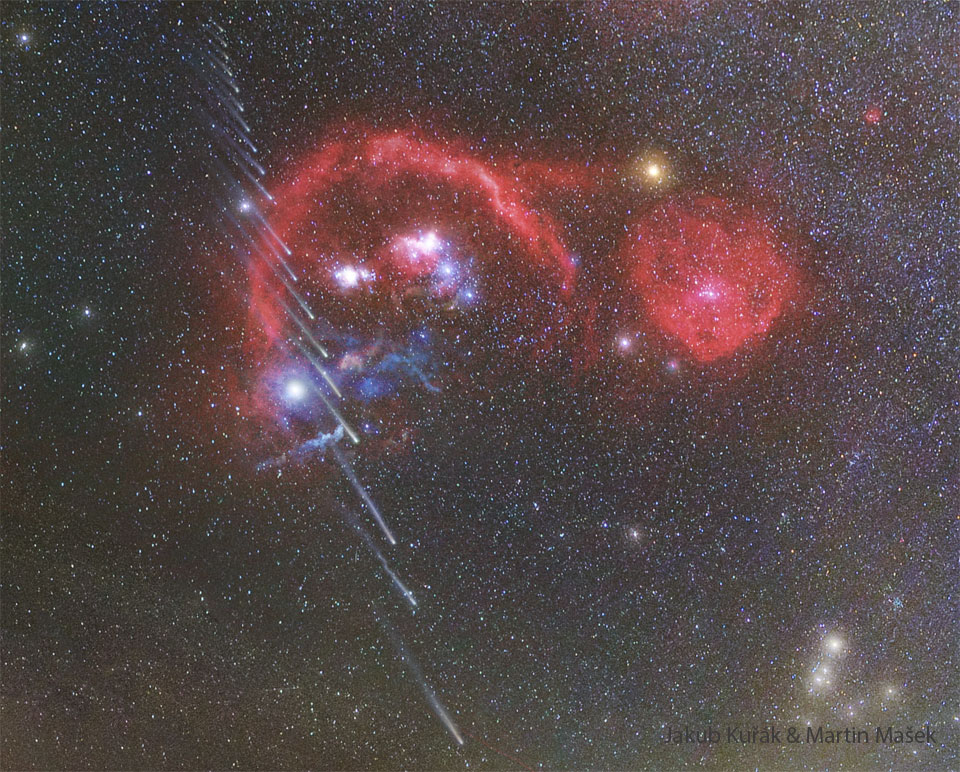
Look up and wonder — today's cosmic highlight is Comet R3 PanSTARRS Through Time:
Why this matters
This scene highlights the planets, near-Earth objects, the night sky. The same physics that lets us photograph it also lets us predict where objects will be tomorrow — which is exactly what real-time tracking is built on.
See it live on ObjectTracer
This connects to what you can track in real time on our 3D globe — explore Solar System view · Asteroid tracker · Deep Space. Or open the live globe to watch flights, satellites, the ISS and spacecraft move right now.
The science, from NASA's Astronomy Picture of the Day
What happens to a comet as it leaves our inner Solar System? Now, the arrival of a comet into the inner Solar System is typically heralded with great fanfare and high hopes that the comet will become bright and photogenic. But on the way out, the comet's nucleus is less warmed by the Sun, less gas and dust are expelled, the bright coma around the nucleus shrinks and fades, and the tail length drops off. Many comets will then return to the outer Solar System and only return in hundreds or thousands of years. In contrast, some comets -- like Comet C/2025 R3 (PanSTARRS) -- receive a gravitational kick from the planets and so will never return. Pictured, Comet R3 PanSTARRs was imaged deeply many nights in early to mid-May near Cerro Paranal in Chile. Later images appear closer to the top and clearly show the shrinking ion tail. Comet R3 Gallery: Comet R3 PanSTARRS in 2026
Image credit: Jakub Kuřák & Martin Mašek (FZU of the Czech Academy of Sciences) · Source: NASA APOD
More from the Space Journal
- Dueling Bands over the Atacama Desert2026-07-06
- The Cotton Candy Clouds of Rho Ophiuchi2026-07-01
- M27: The Dumbbell Nebula2026-06-22
- The Mermaid Nebula Supernova Remnant2026-06-11
- The Dust Trail of Comet Tempel 22026-07-17
- Western Moon, Eastern Sea2026-07-10