2026-08-26
JWST Images The Lion's Head Nebula
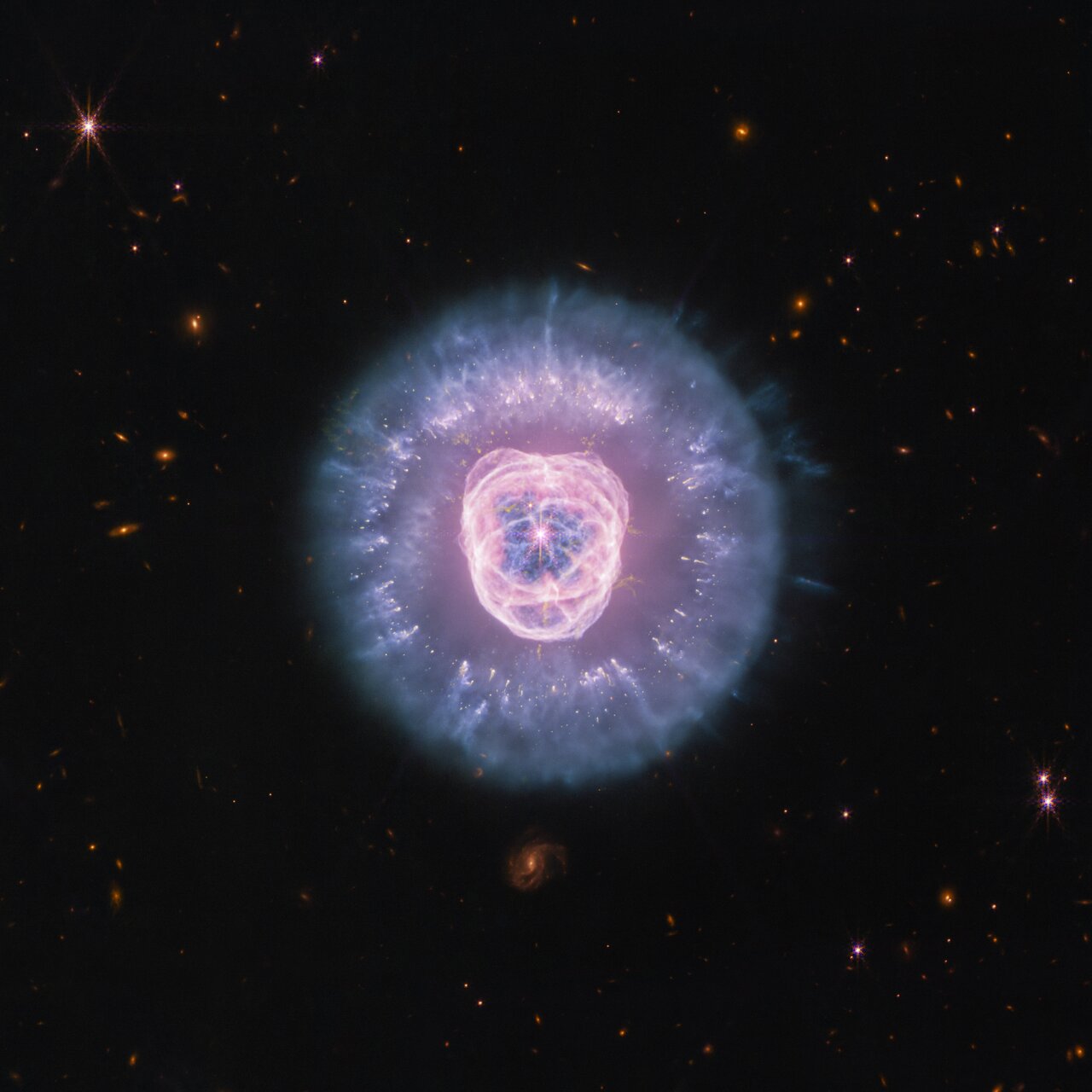
Space never stops amazing us. Today: JWST Images The Lion's Head Nebula. Here is the science:
Why this matters
Today's highlight centers on deep-space objects, the planets. Understanding how these objects form and move is the bridge between a pretty photo and the live, data-driven sky we render on the globe.
See it live on ObjectTracer
This connects to what you can track in real time on our 3D globe — explore Deep Space galaxy map · Solar System view. Or open the live globe to watch flights, satellites, the ISS and spacecraft move right now.
The science, from NASA's Astronomy Picture of the Day
Are we looking at the future of our Sun? The James Webb Space Telescope captured today’s composite image of the Lion’s Head Nebula (NGC 2392) with its NIRCam and MIRI instruments. The Lion’s Head Nebula is the remnant of a Sun-like star. This star was unable to sustain the nuclear fusion in its core needed to remain stable. It began to shed layers of gas and dust into space, forming this planetary nebula. A hot stellar core, called a white dwarf, is left behind within the lion’s nose. Do not boop this nose! Intense radiation from the white dwarf is ionizing the gas as it expands, creating the irregular bubble that makes up the lion’s face. Dust clumps that have survived the white dwarf’s radiation and a cloud of ionized gas make up the lion’s mane. This new and more detailed view of the nebula will help humanity learn more about how the gas and dust interact with each other and the white dwarf radiation.
Source: NASA Astronomy Picture of the Day (public domain)
More from the Space Journal
- Witness XZ Andromedae Wink2026-09-09
- Launch of the Roman Space Telescope2026-08-31
- Time-Lapse of the Star S301 Orbiting the Black Hole in the Center of the Galaxy2026-08-21
- Milky Way over Yellowstone2026-08-16
- LDN 1295: The Giraffe Nebula2026-09-10
- Three Galaxy Pairs2026-08-10
← Earth's Shadow Visualized with Lunar Eclipses · Colorful Aurora over Icelandic Waterfall →