2026-08-05
Spokes on Saturn's B Ring
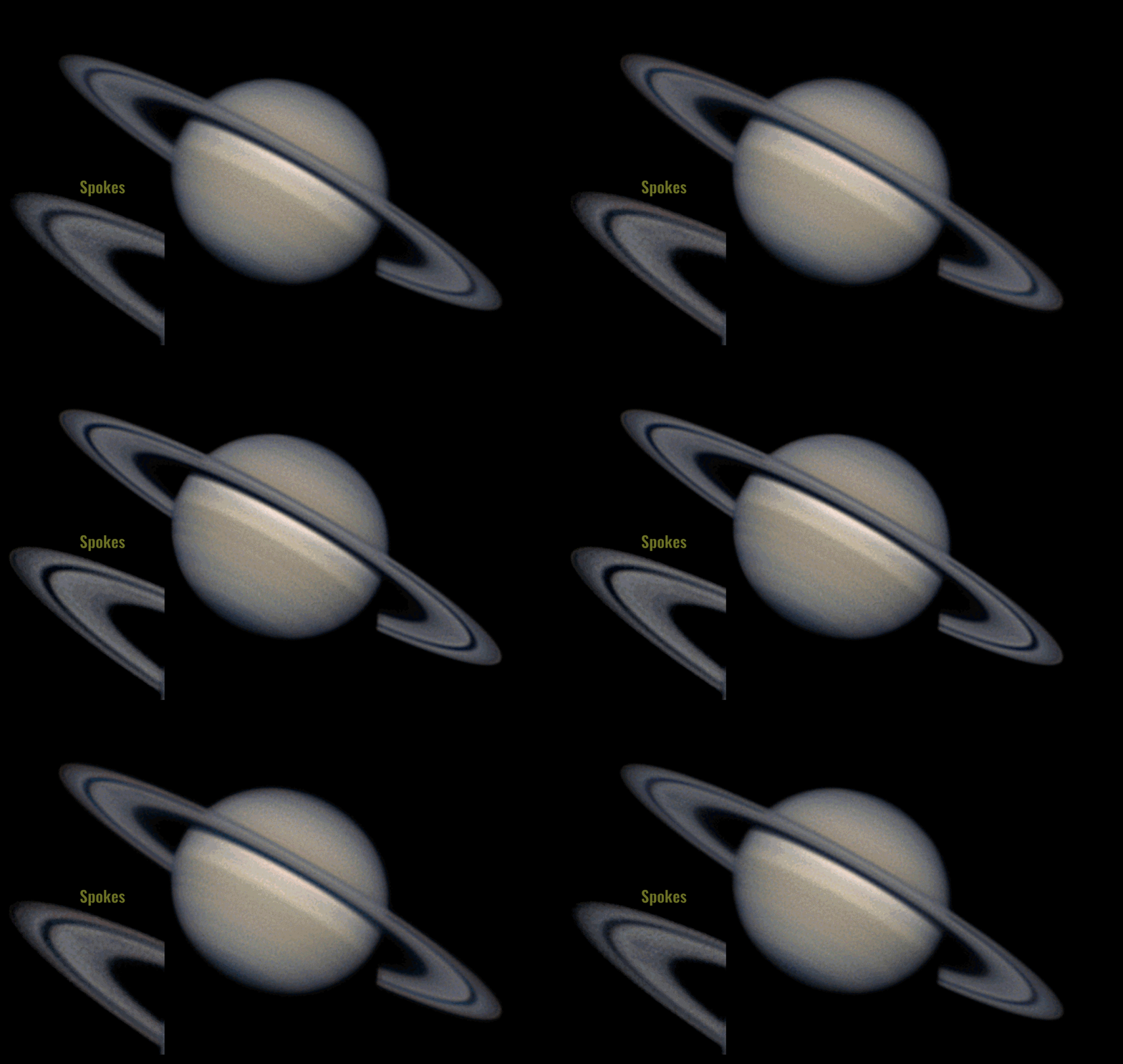
A fresh look at our universe: Spokes on Saturn's B Ring. NASA's take:
Why this matters
What you're looking at ties directly to the Moon, the planets, near-Earth objects. Every frame the world's observatories capture adds another data point to humanity's slowly-assembling map of everything beyond our planet.
See it live on ObjectTracer
This connects to what you can track in real time on our 3D globe — explore Moon tracker · Solar System view · Asteroid tracker. Or open the live globe to watch flights, satellites, the ISS and spacecraft move right now.
The science, from NASA's Astronomy Picture of the Day
Don’t get spooked by Saturn’s ghostly spokes! Today we feature a nearly two-hour timelapse of Saturn and its rings looping forwards and backwards. A day on Saturn is only 10 hours long, so two hours of observation covers quite a bit of its rotation. If you look closely, a ghoulish shadow appears and disappears as Saturn’s B ring rotates. Decades of observation with Voyager 2, Cassini, and Hubble show the appearance of Saturn’s spokes varies with the planet’s seasons. Like Earth, Saturn’s spin axis is tilted compared to the plane of its orbit around the Sun. During Saturn’s equinox, the rings are less tilted away from the Sun and the planet receives more evenly distributed sunlight and solar wind. Although their origin is still uncertain, Saturn’s spokes may be shadows of and reflections off of dust and ice levitating above the rings caused by electromagnetic interactions between the solar wind and the planet’s magnetic field. Find dark skies and look up this August to witness the Perseid meteor shower uninhibited by the Moon!
Image credit: Brad Croslin Text: Keighley Rockcliffe (NASA GSFC, UMBC CSST, CRESST II) · Source: NASA APOD
More from the Space Journal
- Bright Perseids from Sweden2026-08-15
- Perseids Over a little Planet2026-08-12
- A Zodiacal Night2026-09-19
- Chasing the Moon's Shadow2026-09-05
- Where Your Elements Came From2026-09-14
- A Messier Moment for Tempel 22026-08-08
← Curious Cometary Knots in the Helix Nebula · New Sharpest Image of the Sun Uncovers Instability →